Showing 1–7 of 7 results

-
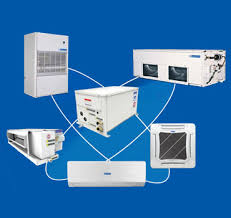
VRF, Ductable Split Unit, Chiller, Commercial AC etc.
VRF AC, or Variable Refrigerant Flow air conditioning, is a highly efficient HVAC system that uses refrigerant to heat and cool multiple indoor units from a single outdoor unit. It works by precisely controlling the amount of refrigerant flowing to each indoor unit, allowing for individual zone control and simultaneous heating and cooling. This technology uses inverter-driven compressors to match the system's capacity to the exact needs of each zone, leading to significant energy savings and quieter operation compared to traditional systems.
A ductless split AC, also called a mini-split system, is a heating and cooling system that works without traditional ductwork. It consists of an outdoor unit that houses the compressor and an indoor unit (or multiple indoor units) that is mounted on a wall or ceiling. These two units are connected by refrigerant lines and wiring, making it an efficient way to heat or cool specific rooms or zones, especially in homes without existing ducts.
Commercial AC refers to powerful, large-scale air conditioning and ventilation systems designed for non-residential buildings like offices, malls, and hospitals. These systems are built to cool and regulate temperature, humidity, and air quality in large spaces and are more robust than residential units, with various types available to suit different commercial needs.
In HVAC, a chiller is a machine that cools a liquid, usually water, which is then pumped through a building to provide air conditioning. It is the central component of a large-scale air conditioning system, removing heat from the liquid using a refrigeration cycle and then dissipating that heat to the outside air.
In HVAC, a "cassette" is a type of split air conditioning unit with a compact indoor unit installed flush with a false ceiling, leaving only a sleek grille visible. This design distributes conditioned air in multiple directions for uniform cooling and is often used in commercial spaces like offices and large rooms, though it is also available for residential use. The outdoor unit containing the compressor is located outside, connected by refrigerant lines hidden above the ceiling.
Know More -
Roof Top Solar System
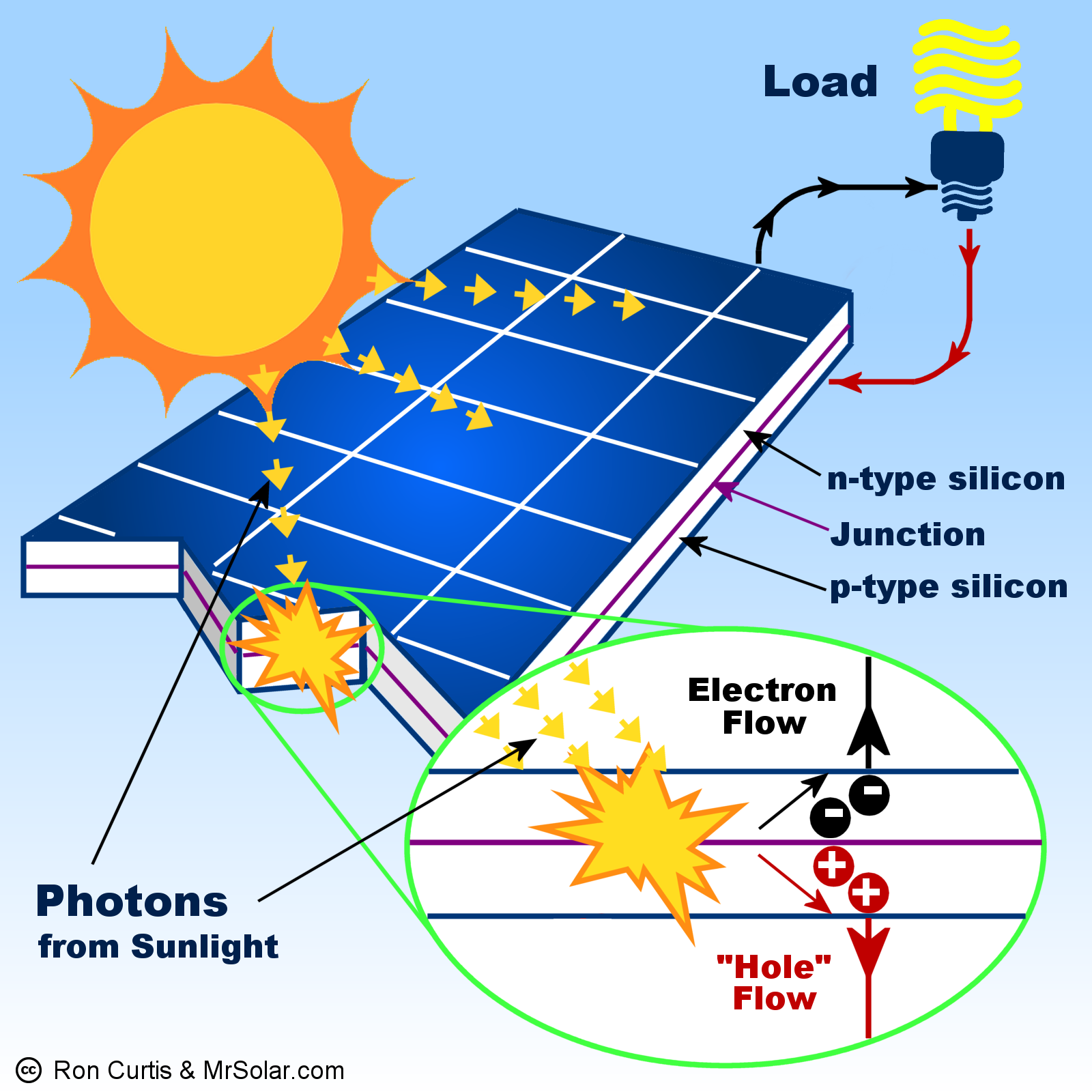
A solar panel is a device that converts sunlight into electricity using photovoltaic (PV) cells made from semiconductor materials like silicon. When sunlight strikes the panel, it excites electrons in the semiconductor, creating an electric current that is captured by wiring. This direct current (DC) electricity is then converted to alternating current (AC) by an inverter, making it usable for homes, businesses, or the electric grid.
A solar rooftop system is a collection of photovoltaic (PV) panels installed on the roof of a building to convert sunlight into electricity. The system, which can be connected to the grid or operate independently, provides clean energy for on-site use and can reduce electricity bills by allowing excess power to be sold back to the utility.
Know More -
CC Camera , CAT6 Cable etc.
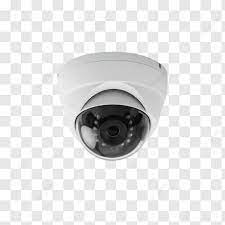
A CC camera, or Closed-Circuit Television (CCTV) camera, is a video camera used for surveillance that transmits a signal to a private set of monitors rather than broadcasting publicly. These systems, which can include cameras, monitors, and recording devices, are primarily used for security, crime prevention, and monitoring in a wide range of public and private spaces.
A Cat6 cable is a twisted-pair cable for computer networks that supports speeds up to 1 gigabit per second (Gbps) and operates at frequencies up to 250 MHz. The "cc" most likely refers to "CCTV" (Closed-Circuit Television), meaning the cable is intended for use with surveillance systems to transmit video and sometimes power (Power over Ethernet).
CCTV surveillance is a system of video cameras that transmit signals to a specific set of monitors, unlike public broadcast TV. It is used to monitor and deter criminal activity, and can be used for security in public, private, and commercial spaces. The "closed-circuit" nature means the video feed is only accessible to authorized users on a private network.
Know More -
PIR Duct
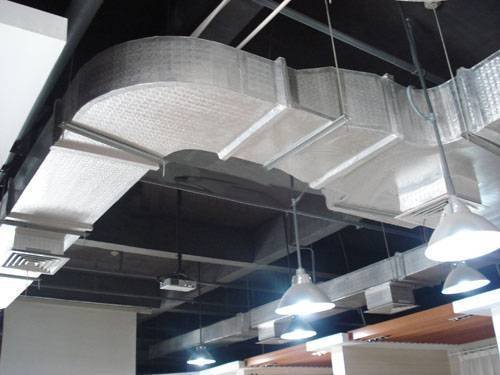
A PIR duct is a pre-insulated air duct system made from rigid polyisocyanurate (PIR) foam sandwiched between aluminum foil or galvanized iron sheets. It is an energy-efficient and environmentally friendly alternative to traditional ductwork, used in HVAC systems for its superior thermal insulation, durability, and fire-resistant properties.
Know More -
Axial Fans, Propeller Fans, Inline Fans etc.
An axial fan moves air parallel to its axis, similar to a propeller, and is used for high-volume, low-pressure applications like ventilation and cooling. The rotating blades create a pressure difference that draws air in from one end and expels it out the other in a straight line, making them common in HVAC systems, electronics cooling, and industrial exhaust systems.
Know More -
Grill, Diffuser, Damper
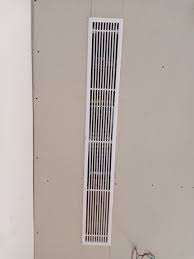
An HVAC system's grill is the visible cover for an air vent, which distributes or collects air and is a crucial part of the system's functionality and appearance. Its main purposes are to facilitate even airflow, ensure comfort, and direct air in specific directions. Grills are made from materials like aluminum or steel, can be powder-coated for durability and aesthetics, and come in various types, such as supply, return, and registers.
An HVAC diffuser is a device that distributes conditioned air (heated or cooled) from ductwork evenly into a room. It is designed to control the direction and flow of air, suppress drafts and noise, and help mix the air in the space. Diffusers are installed in ceilings, walls, or floors and come in various shapes and designs, such as round, square, or linear slots.
An HVAC damper is a mechanical valve or gate within ductwork that controls the amount of airflow to different zones in a building. They are crucial for balancing air, enhancing comfort, and ensuring safety by regulating the flow of heated or cooled air. Dampers can be manual, controlled by levers, or automatic, responding to signals from a control system.
Know More -
Air Filter
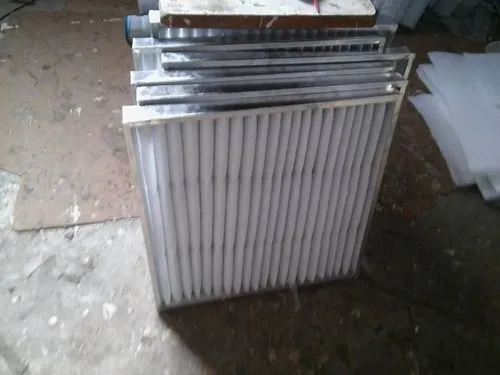
An air filter is a device made of fibrous materials that removes particles like dust, pollen, and pollutants from the air. It's used in many applications, including HVAC systems, air purifiers, and car engines, to protect health, improve performance, and extend the life of equipment.A microfilter is a small device that can refer to either a physical filter used in water or air purification, or a simple electronic device used to prevent interference on phone lines. Physical microfilters use a membrane with small pores to separate particles from a fluid, while DSL microfilters plug into a phone socket to separate broadband and phone signals.A pre-filter is a filtration device that removes larger particles before they reach a main or primary filter, protecting it and extending its lifespan. They are used in various systems, including HVAC, air purifiers, water purifiers, and industrial air compressors, to capture contaminants like dust, pollen, sediment, and moisture.A fine filter, also known as a secondary or MICROVE filter, is a component used in air or fluid purification systems to capture smaller particles and contaminants that pass through a pre-filter. These filters are essential for improving air quality in HVAC systems, protecting equipment, and ensuring product cleanliness in various applications. They are designed to remove particles typically in the 1 to 10-micron range, with efficiencies specified by standards like EN779 (F5-F9) or ASHRAE 52.2 (MERV 8-15).A HEPA filter, or High-Efficiency Particulate Air filter, is a mechanical air filter that can trap a minimum of 99.97% of airborne particles as small as 0.3 microns. It is a crucial component in air purifiers, vacuums, and other devices to remove microscopic pollutants like dust, pollen, pet dander, mold spores, and bacteria from the air, making it a standard for clean indoor air.Know More