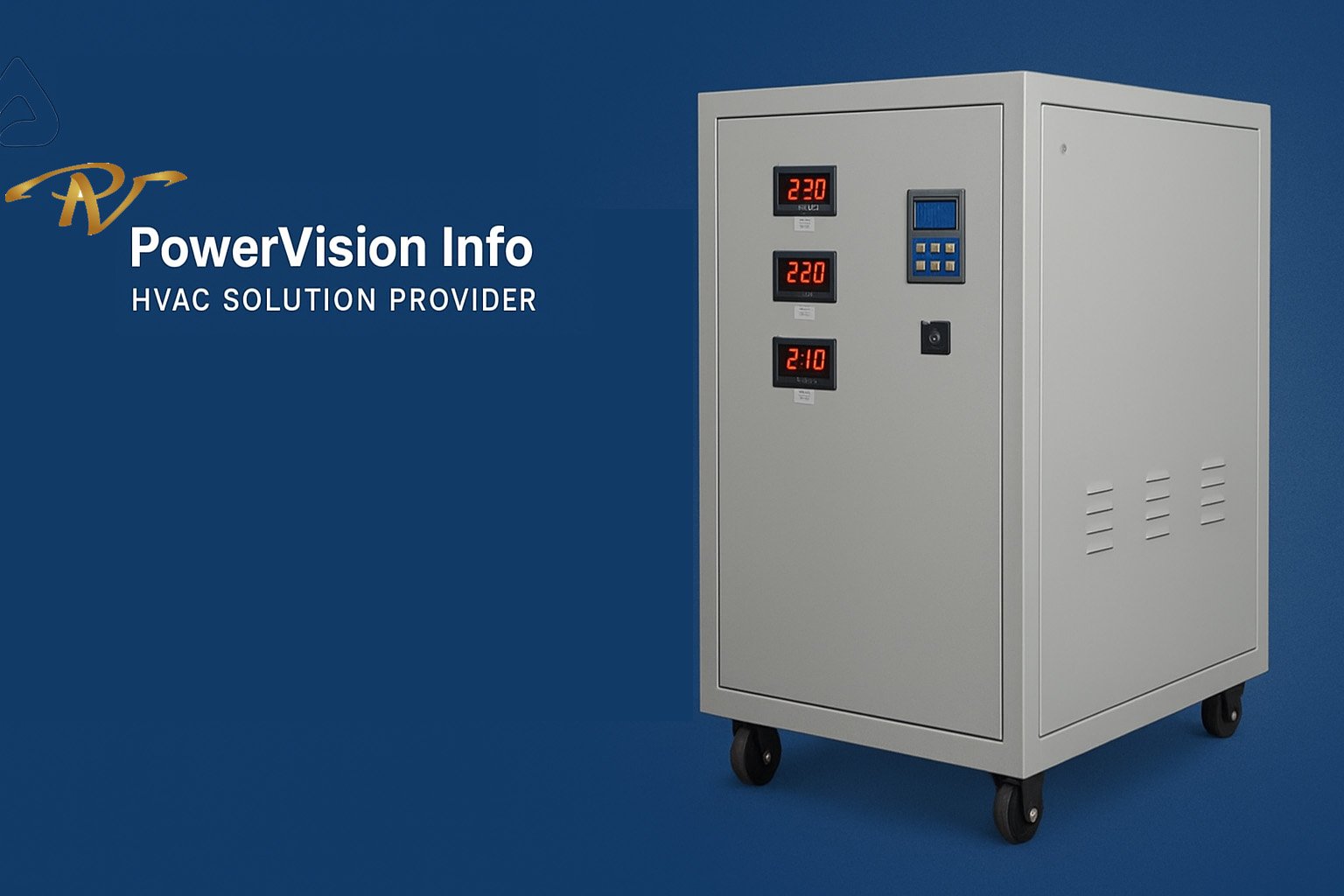
Transformers play a silent but crucial role in maintaining the safety, performance, and efficiency of any electrical infrastructure. Whether it’s a manufacturing plant, HVAC system, data center, commercial building, or renewable energy setup—choosing the right transformer manufacturer is essential. A high-quality transformer ensures stable power distribution, reduces downtime, and protects sensitive equipment from voltage fluctuations and failures.
As an HVAC Solution Provider, PowerVision Info understands that transformer performance directly impacts the stability of air-conditioning systems, chillers, compressors, motors, and allied equipment. A wrong selection can result in overheating, frequent tripping, high power consumption, and even catastrophic failures.
This comprehensive guide will help industries, contractors, and project managers choose the best transformer manufacturer for long-lasting reliability.
1. Understand Your Technical Requirements
Before evaluating manufacturers, you must clearly define your application needs. This step ensures accurate quotations, suitable designs, and long-lasting operation.
Key points to consider:
-
Required kVA/MVA rating
-
Primary and secondary voltage levels
-
Type of transformer (Dry-Type, Oil-Filled, Distribution, Power Transformer)
-
Load type (HVAC motors, machinery, mixed industrial loads)
-
Installation environment (indoor/outdoor, high-temperature zones)
-
Cooling type required (ONAN, ONAF, AN, AF)
For HVAC applications, the transformer must handle:
-
High starting torque of compressors
-
Sudden load variations
-
THD (Total Harmonic Distortion) from VFD-driven systems
Clear specifications help in finding a manufacturer capable of delivering the right design with high efficiency.
2. Check Industry Certifications and Testing Standards
A reliable transformer manufacturer should comply with national and international standards. Certifications and test reports guarantee the product’s safety, durability, and performance.
Look for these certifications:
-
IS 1180 / IS 2026 (Indian Standards for transformers)
-
IEC 60076 (International standard for power transformers)
-
ISO 9001: Quality Management
-
ISO 14001: Environmental Management
-
BEE Star Rating (Energy Efficiency)
-
Type Test Certificates:
-
Impulse Test
-
Short Circuit Test
-
Temperature Rise Test
-
A manufacturer who willingly shares test reports is more trustworthy.
3. Evaluate Manufacturing Capabilities
The quality of a transformer depends heavily on the factory infrastructure, skilled workforce, and quality control processes.
Important factors to assess:
-
CNC coil winding machines
-
Vacuum drying ovens
-
In-house testing laboratories
-
High-grade CRGO or Amorphous metal core cutting
-
Oil filtration & treatment facilities
-
Automated manufacturing line
-
Skilled engineers with transformer design experience
A well-equipped manufacturing unit ensures accuracy, consistent quality, and better heat management—critical for HVAC loads.
4. Analyze the Quality of Materials Used
The core and winding materials determine the efficiency and reliability of a transformer.
Core Material:
-
CRGO (Cold Rolled Grain Oriented Steel): Ideal for high efficiency
-
Amorphous Metal: Superior energy savings
Winding Material:
-
Copper windings: Better current carrying capacity, durability
-
Aluminium windings: Cost-effective but less efficient
Insulation & Oil Quality:
-
High dielectric strength oil
-
Class F / H insulation for higher temperature zone
-
Moisture-resistant insulation for humid areas
For HVAC systems—where transformers may operate in harsh environments—premium materials significantly extend lifespan.
5. Review the Manufacturer’s Experience and Past Projects
Experience matters—especially when you're investing in equipment that affects your entire facility.
Check for:
-
Years of industry presence
-
Completed industrial projects
-
Client list across HVAC, manufacturing, commercial, and utility sectors
-
Case studies or installation photos
-
Testimonials from major industries
A manufacturer with a strong track record ensures better design customization and stable after-sales support.
6. Don’t Choose Based on Price Alone
Low-priced transformers often use low-grade materials, which leads to:
-
Higher load losses
-
More heat generation
-
Frequent breakdowns
-
Shorter lifespan
-
Increased electricity consumption
Instead, check:
-
Efficiency class (Level 1 preferred)
-
No-load and load-loss values
-
Copper vs aluminum
-
Warranty period
-
Quality certifications
Always compare technical specifications, not just quotations.
A cheaper transformer costs more in the long run.
7. Evaluate Customization Capability
Every industry has unique requirements. A good transformer manufacturer must offer:
-
Custom HV/LV ratings
-
Tap changer adjustments
-
Special cooling options
-
Harmonic-resistant designs
-
Transformers for VFD-driven HVAC loads
-
Compact designs for space-constrained rooms
This flexibility ensures the transformer perfectly matches your application.
8. Check Delivery Timelines
Delays can impact project schedules, HVAC commissioning, and production timelines.
Ask the manufacturer:
-
What is their standard lead time?
-
Do they have ready stock?
-
Can they handle urgent orders?
-
Do they follow project-based delivery?
Timely deliveries reflect professionalism and structured manufacturing processes.
9. Assess After-Sales Service & Technical Support
Transformers require monitoring, oil testing, and periodic maintenance. A responsible manufacturer should provide:
-
On-site installation support
-
Maintenance guidelines
-
Warranty coverage
-
Quick response for faults
-
AMC (Annual Maintenance Contract)
For HVAC industries, quick service is extremely critical—downtime affects comfort and operational efficiency.
10. Consider the Manufacturer’s Market Reputation
A company's reputation gives a clear picture of its reliability.
Evaluate:
-
Market reviews
-
Ratings on professional platforms
-
Industry references
-
Longevity in the market
Stable and financially strong companies provide consistent support for years.
Conclusion: Make an Informed Choice for Long-Term Reliability
Selecting the right transformer manufacturer is not just a purchase—it’s a long-term investment in performance, safety, and efficiency.
The right manufacturer will offer:
-
Certified and tested products
-
High-quality materials
-
Advanced manufacturing technology
-
Strong technical support
-
Custom solutions for HVAC applications
For HVAC-based industries, data centers, and commercial setups, a carefully chosen transformer ensures your systems operate smoothly with minimal failures.
PowerVision Info recommends choosing manufacturers who prioritize engineering excellence, material quality, and customer support. With the right transformer partner, your electrical infrastructure will remain stable, efficient, and future-ready.